Solaris
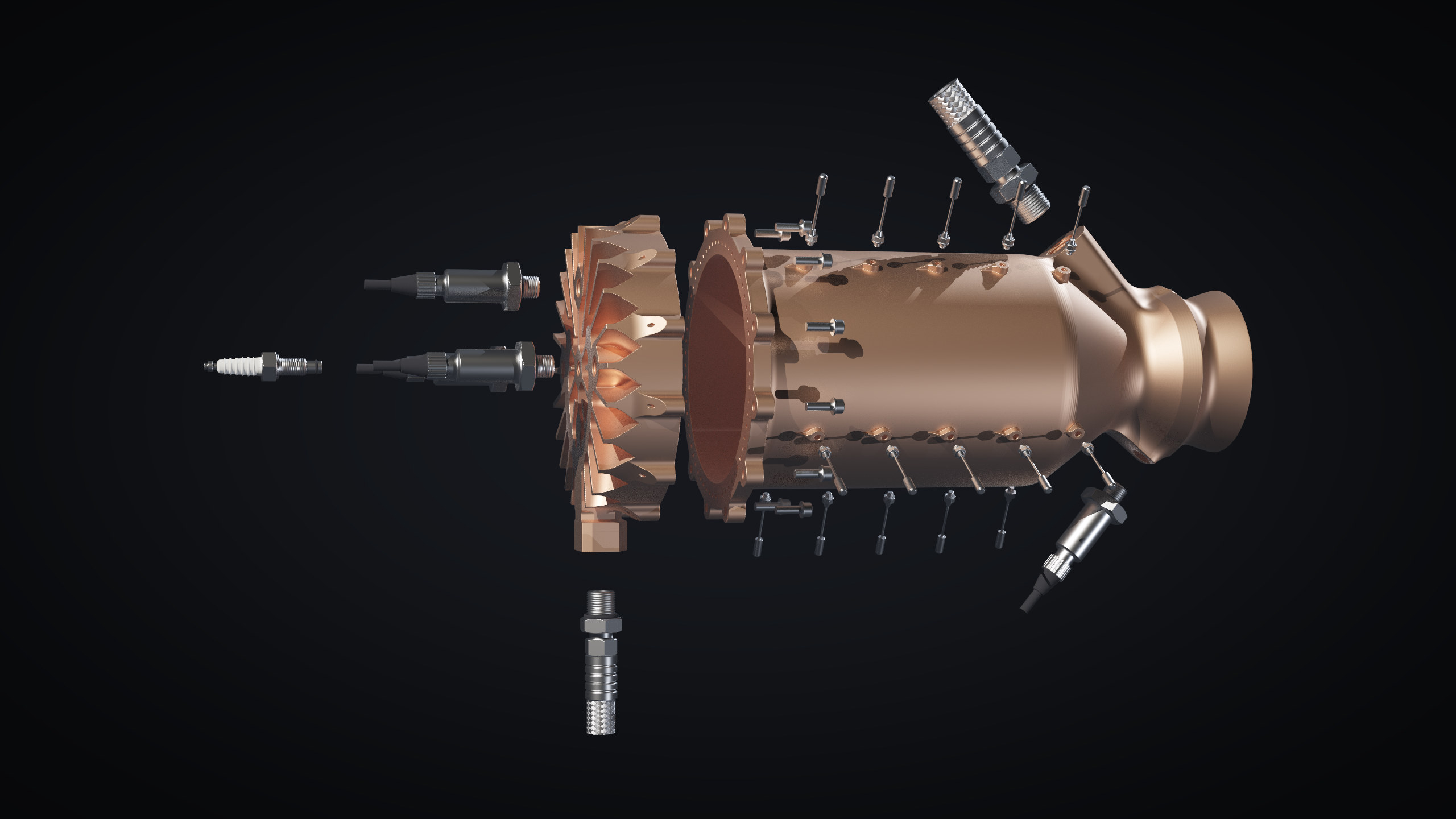
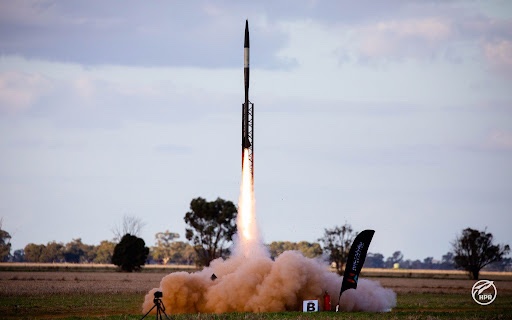
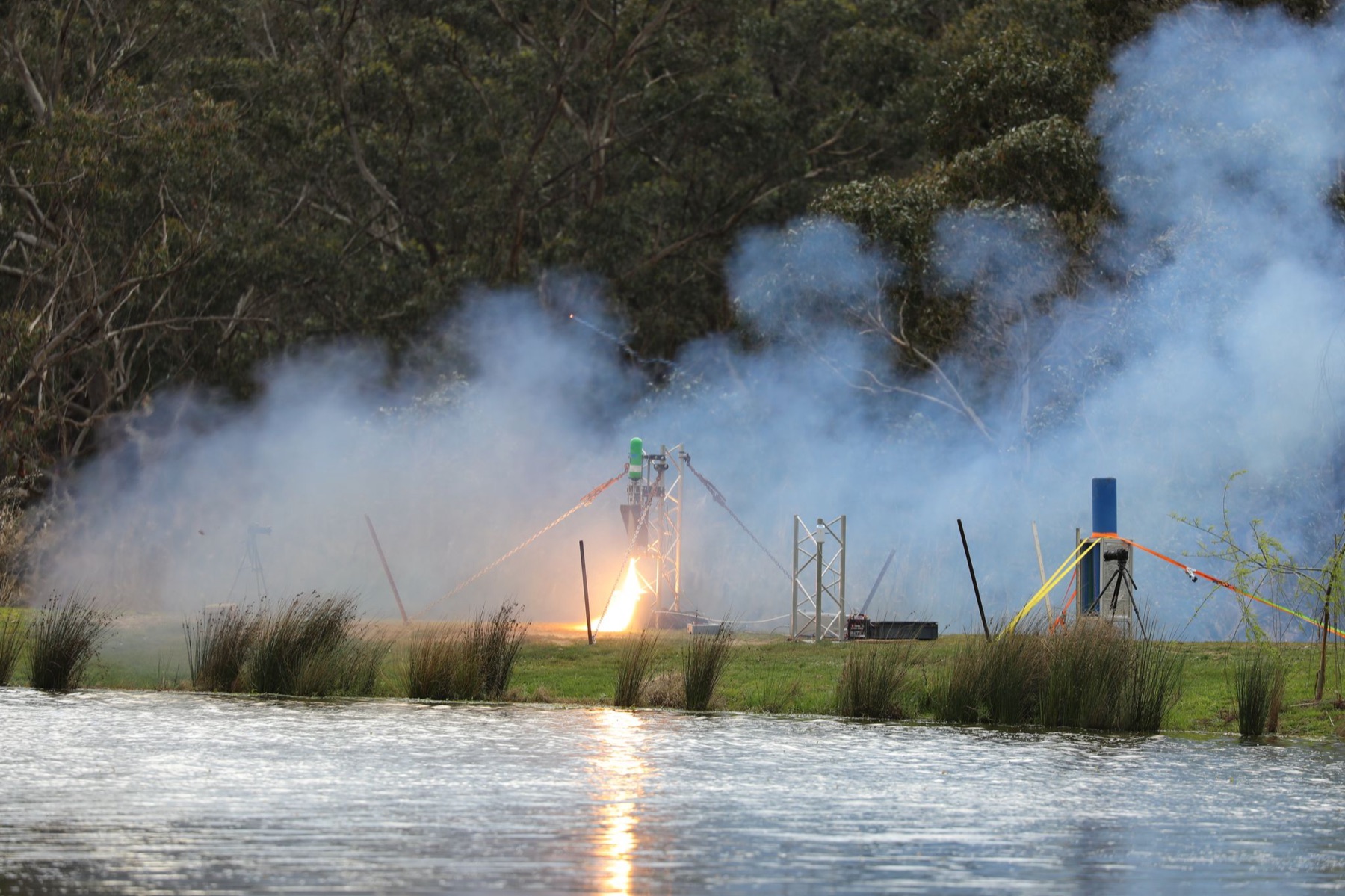
Hybrid motor · 2019–2023The first hybrid rocket motor built by Monash High Power Rocketry. I was lead engineer from design through manufacture to hot fire, leading the team of 13 that tested it.
Mechanical engineer in Melbourne. I build and test pressure and propulsion hardware: lead engineer on a hybrid rocket motor through about ten hot fires, engine testing at Dawn Aerospace, CuCrZr thrust chamber printing, and the design, assembly and test of deep-sea pressure vessels today. Alongside that, I write the software that designs printable rocket engines.
The first hybrid rocket motor built by Monash High Power Rocketry. I was lead engineer from design through manufacture to hot fire, leading the team of 13 that tested it.
A Python library for designing 3D-printable lattice parts, which most CAD tools handle poorly. Shapes are defined by equations instead of triangle meshes, and rendered live on the GPU.
Drag to orbit · scroll or pinch to zoom
Every shape, from a box to a gyroid lattice to an imported STL, is a signed distance field evaluated in real time with Taichi (WIP Rust port). Parts combine through boolean CSG and TPMS infills, update instantly in a physically based ray marcher, and export to STL for printing. I wrote it to design printable lattice parts for additive manufacturing without fighting mesh topology, but geometry defined in code allows much more: a part can be driven by parameters, sized by an optimiser and handed straight to a simulation, as the micromixer below and ColdFlow show.
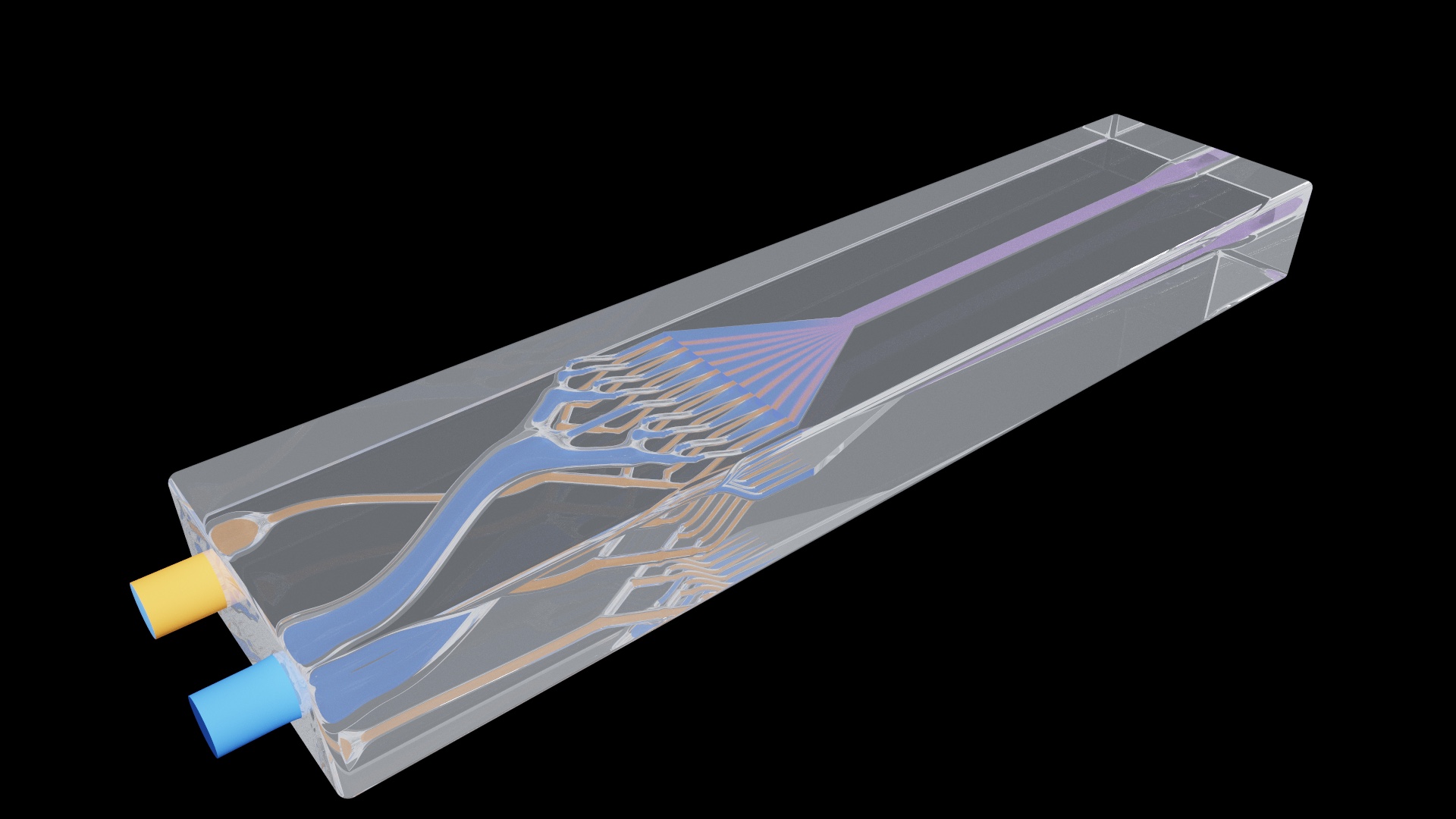
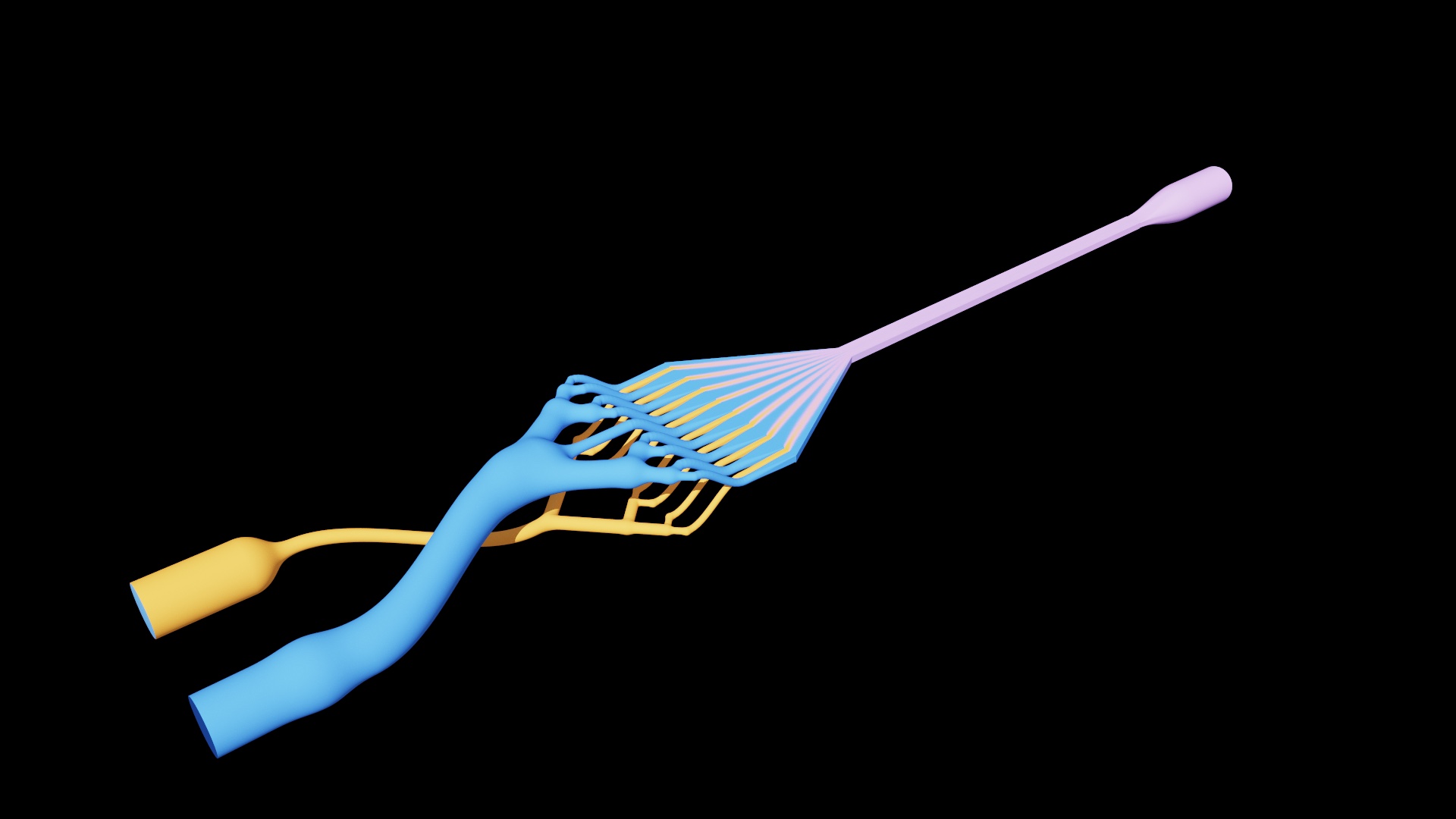
Two fluids, one 3.3 times as viscous as the other, are wanted in the ratio 1 part to 3 and mixed in a few millimetres. Each is split by its own branching tree, and the leaves meet a narrowing channel as alternating stripes. An optimiser sizes every tube so the ratio comes out exact at one shared pressure, and OpenFOAM checks the result: the trees deliver 1 : 3.0007 in 3D, and the channel is 99.1% mixed at 8 mm.

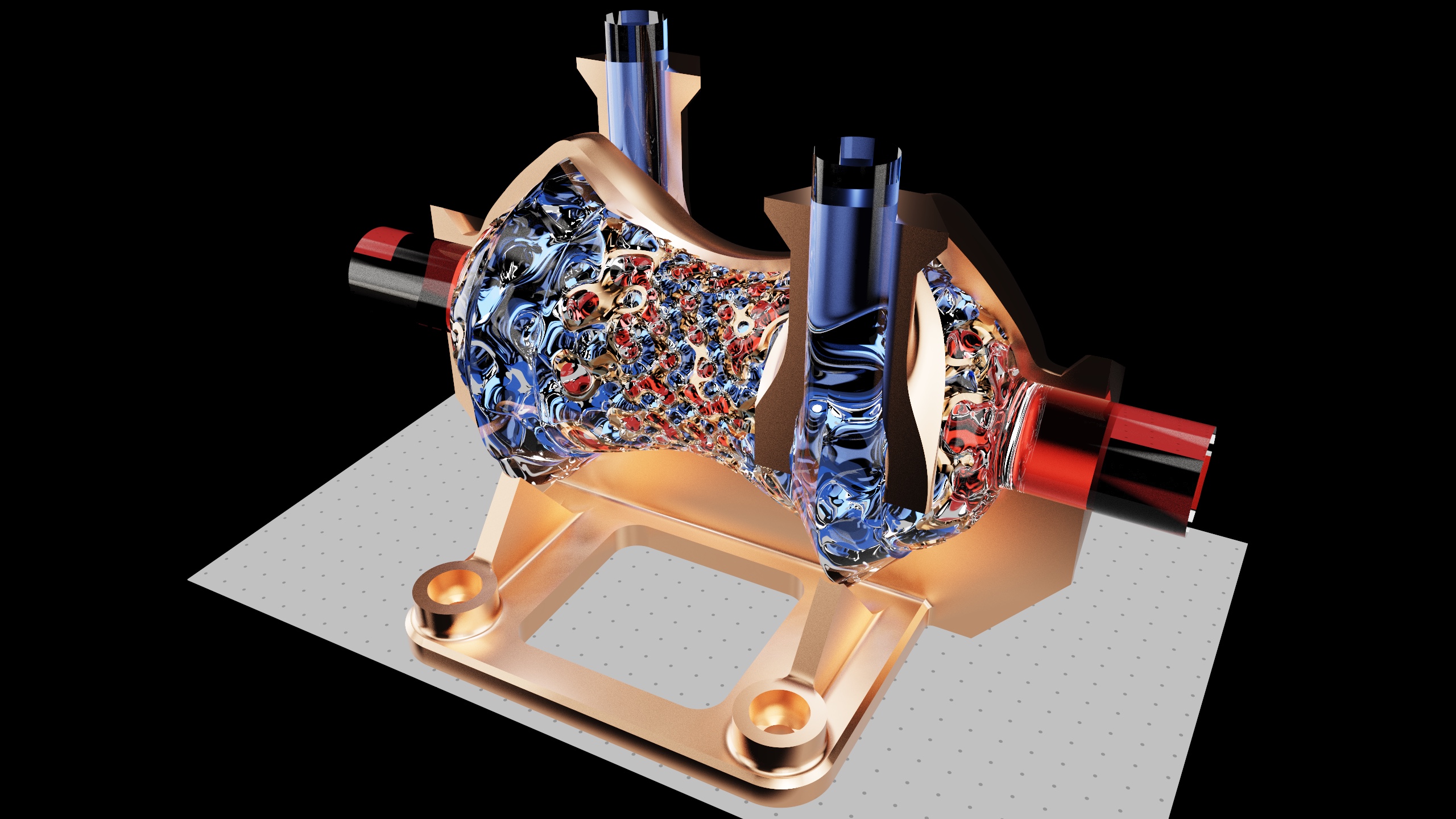
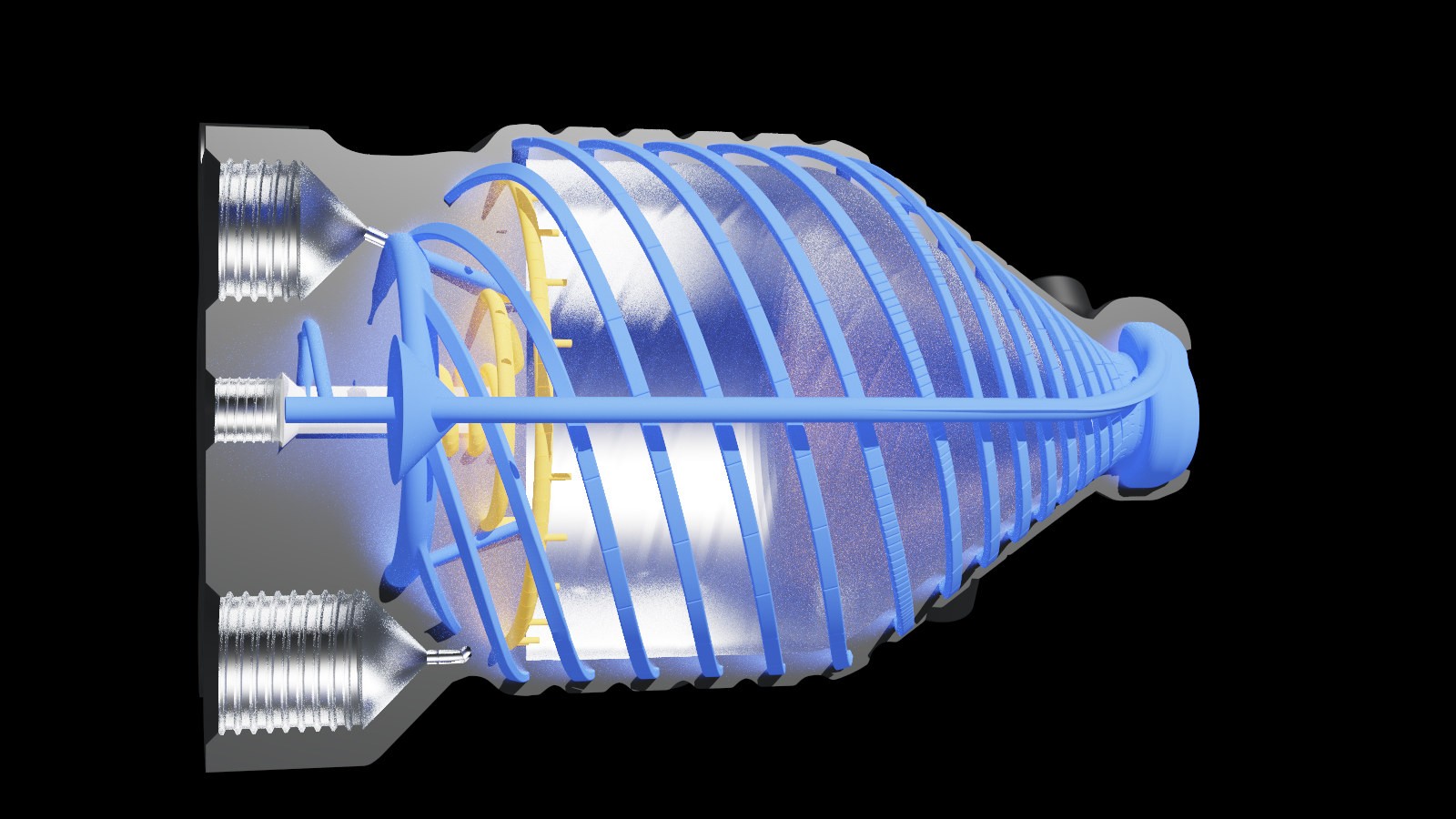
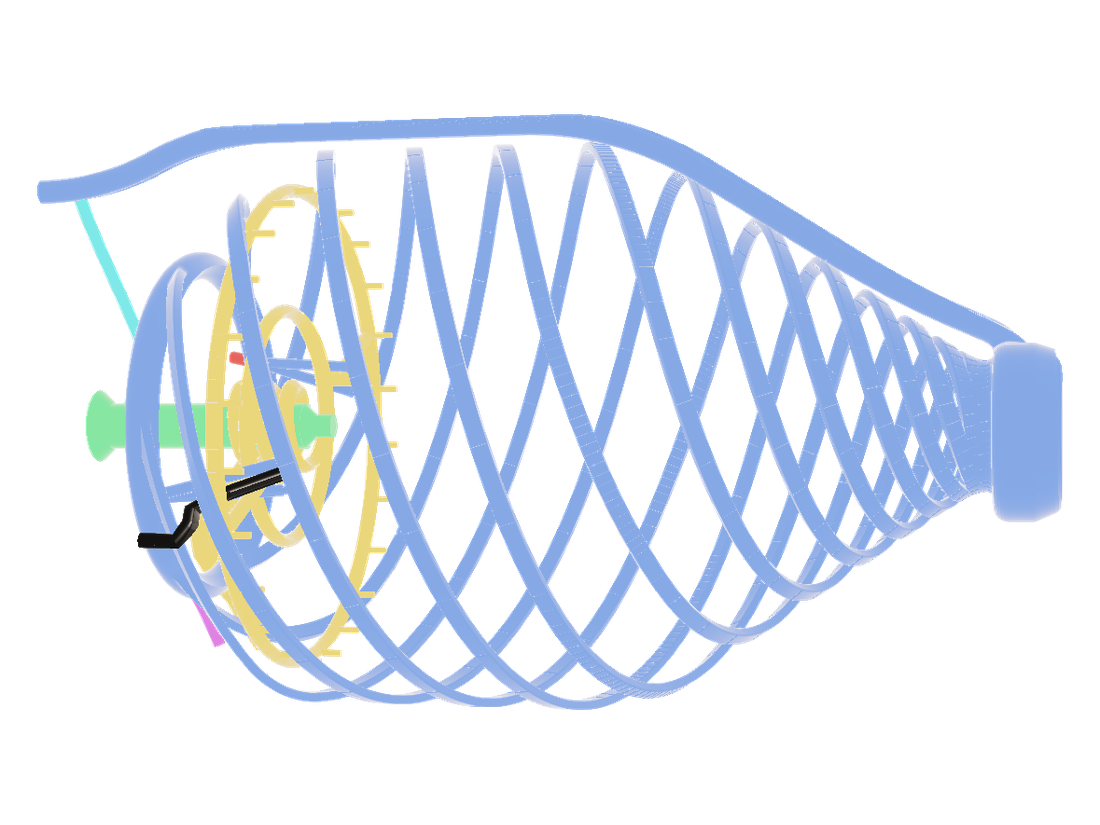
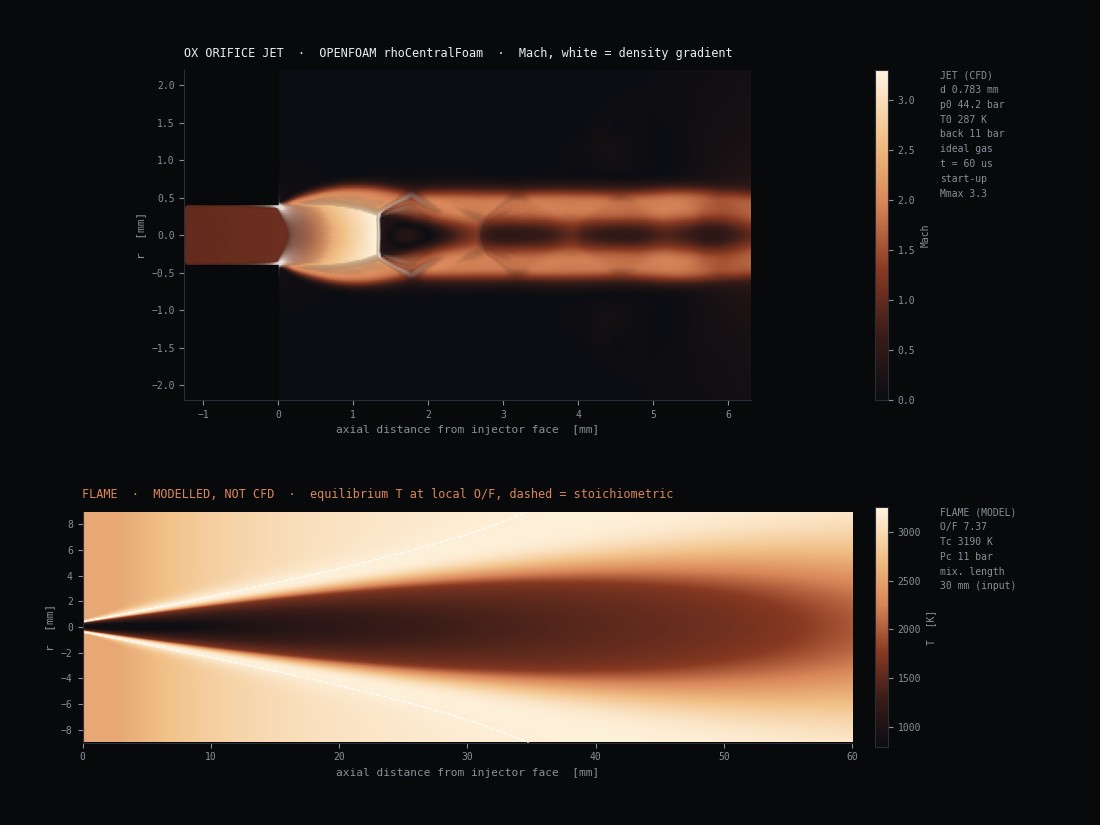
An extension of FluidForm that turns the implicit geometry engine into a tool for building rocket engines of all sizes, from propellant choice to a 3D-printable design, checked along the way.
Nitrous oxide and LPG at 11 bar, in AlSi10Mg. The design has been through a verification gate.

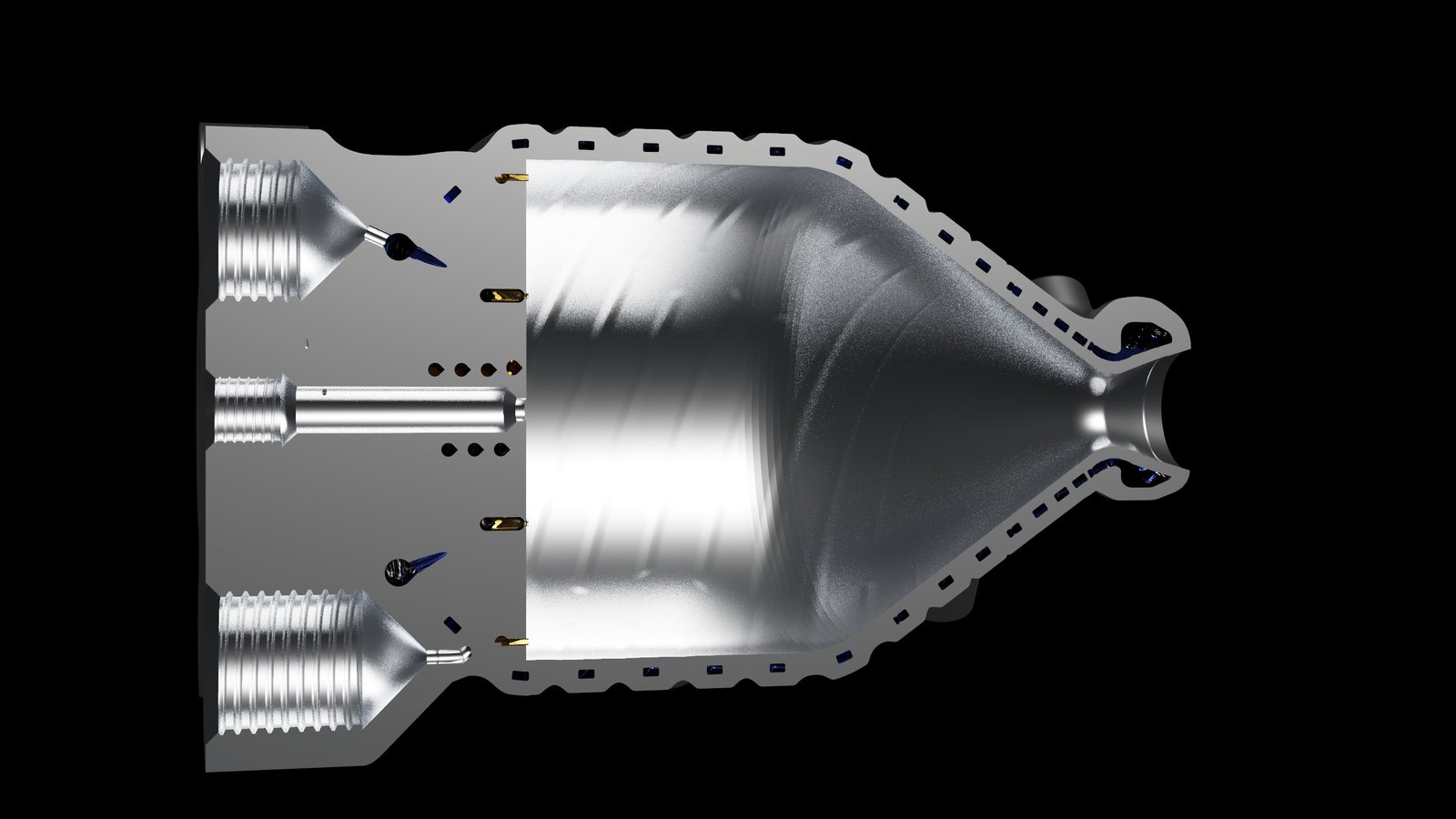
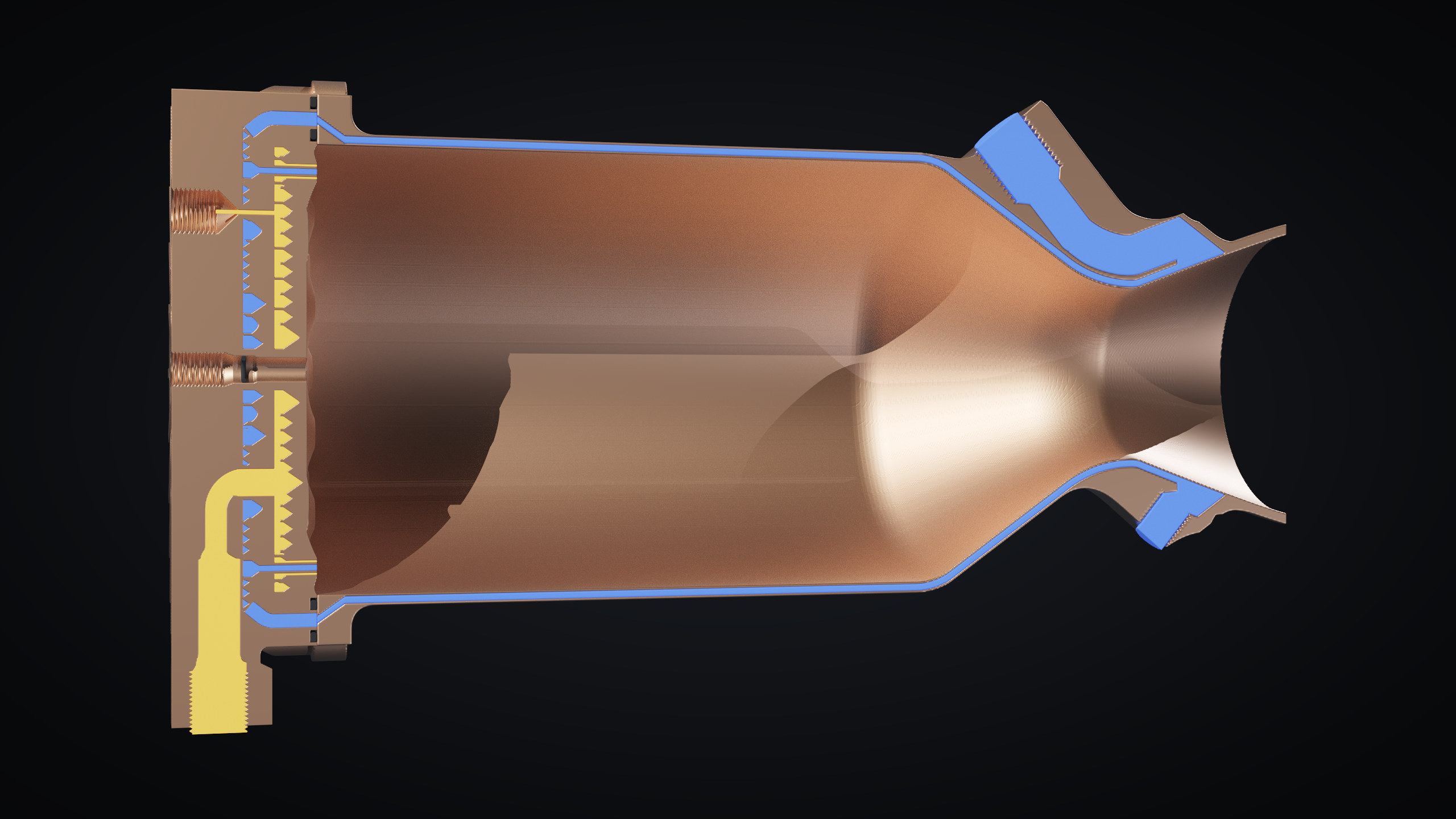
Nitrous oxide and ethanol at 15 bar, built by the same code at a hundred times the thrust: a sized concept with a computed thermal march and print audit.
The CuCrZr isn’t new to me: in my final-year project at the Monash Centre for Additive Manufacturing I tuned laser powder-bed fusion parameters to print it on a conventional machine, from test coupons and calibration pieces to a printed small engine.
Neither engine has been hot-fired, and the CFD is cold flow only.
The Aether competition rocket for the 2022 Spaceport America Cup, and my own Level 1 and Level 2 certification flights, which followed a failed first attempt.
Torque-controlled assembly, hydrostatic and vacuum leak testing, pre-integration inspection, test procedures and readiness checks, ground support equipment design
AS 1210 pressure vessel design, pneumatics, high-pressure cryogenic fluid systems
Manual and CNC machining, lathe and mill; FDM rapid prototyping; drawings and supplier liaison for machined parts; CuCrZr laser powder-bed fusion parameter development; design for laser powder-bed fusion
SolidWorks, Creo, ANSYS, OpenFOAM, nTopology, NX
PTC Windchill, Siemens Teamcenter
Python, MATLAB, Mathematica
BEng (Hons) Mechanical & BSc Physics, Mathematics, Monash University, 2018–2023. Final-year project on 3D-printed CuCrZr thrust chambers at the Monash Centre for Additive Manufacturing